Comparison
Best Trials Boots 2026/27: Gaerne vs Hebo vs Sidi vs Alpinestars vs Forma for UK Riders
Gaerne Balance, Hebo Technical 3.0, Sidi Trial Zero.2, Alpinestars Tech T and Forma Boulder compared on construction, grip, waterproofing, fit and UK price, plus kids' boots, care, resoling and which boot suits which rider.
Boots are the one piece of trials kit that touches the bike on every single section. They decide how well you feel the footrests, how cleanly you can dab a foot down on a greasy rock, and whether you finish a wet winter trial with dry socks or a pint of Pennine bog in each foot. They are also expensive. A good pair now costs between £200 and £340 in the UK, and the choice has narrowed: Sidi has moved on from the Zero.1, Alpinestars' Tech T is getting harder to find in some colours, and Jitsie's boots were only ever short limited editions. So if you are a clubman, a returning rider or a parent kitting out a youth rider for 2026/27, this guide covers every serious trials boot you can buy in Britain: how each is built, how it grips, how it fits, what it costs and which one suits which rider.
Why trials boots are different
Coming from motocross or enduro, the first surprise is how soft a trials boot feels. That is deliberate. A motocross boot is built for big landings, with a stiff sole, usually a steel shank, a rigid ankle brace and heavy plastic armour. It is a poor partner for observed trials.
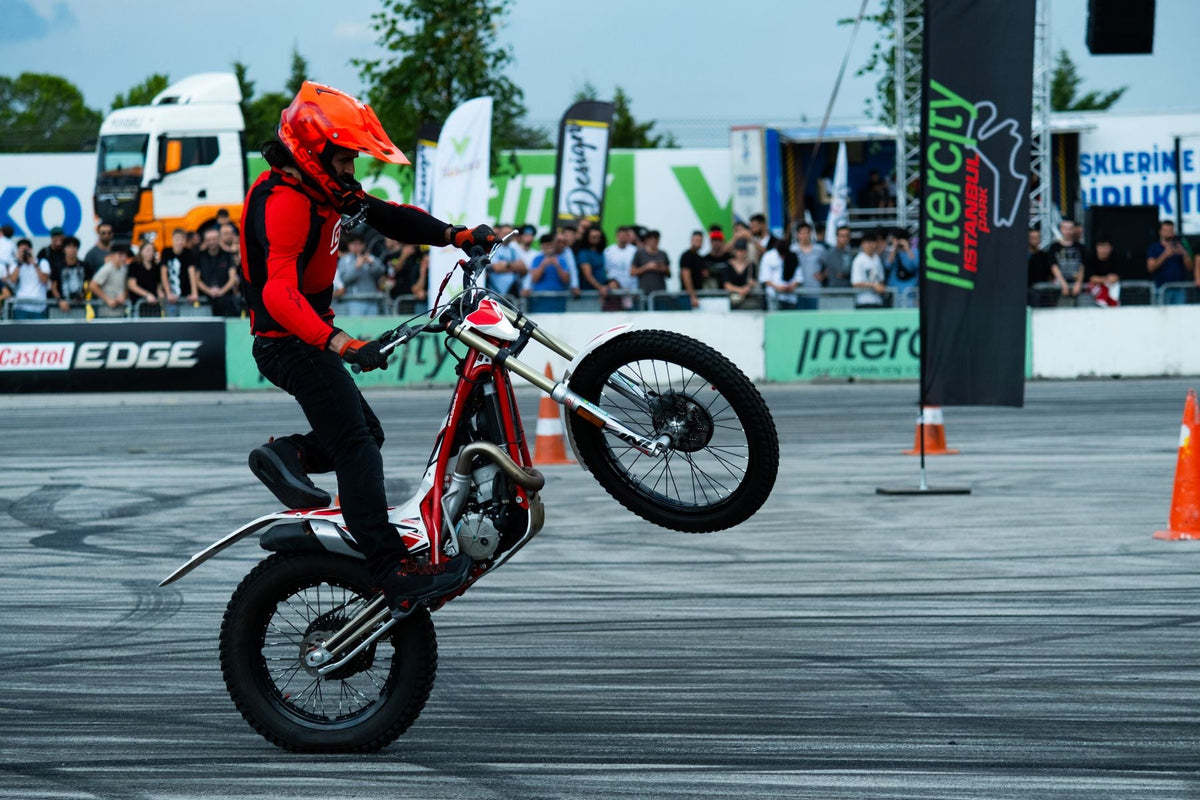
Trials riding is about precision at walking pace. You stand on the footrests almost the whole time, shifting your weight forward and back to load the front or rear tyre. You need to feel the brake pedal through the sole and press it a few millimetres at a time. You need your ankles to flex as you move your hips over the bike. And when it goes wrong, you need to put a foot down (a "dab", which costs you one mark from the observer) on wet rock, mud or a slimy tree root without the foot shooting away. A clean section means no dabs at all.
So a trials boot is built around four things:
- Feel. A thinner, more flexible sole, so you can sense the footrest and brake pedal. Hebo describes the sole on its Technical 3.0 Micro as thinner than most trials boots for exactly this reason.
- Grip on foot. A soft, sticky rubber compound with a shallow tread, closer to a walking boot than a motocross sole. Motocross soles are smooth so the foot can slide in corners. Trials soles are designed not to slide.
- Ankle movement. Enough support to protect the ankle, but enough flex to let you move around the bike. Gaerne, Hebo and Forma all put flex panels at the instep and back of the boot.
- Walking comfort. A club trial means walking sections before you ride them, and at the Scottish Six Days or the Scott you may be on foot for hours. A motocross boot is miserable for that.
The trade-off is protection. Owners on Trials Central consistently say that trials boots give less crush protection around the toes and foot than an enduro boot, and that soft leather offers even less once it is soaked. If you also ride green lanes or enduro, you will want a separate pair of boots for that. For trials, the trials boot wins every time.
The boots at a glance
Here is how the main trials boots on sale in the UK compare. Prices are the full price or RRP at the time of writing (November 2026) from the source named, not the lowest discount we saw.
| Feature | Gaerne Balance Pro-Tech | Gaerne Balance Oiled / XTR | Hebo Technical 3.0 (Leather / Micro / WP) | Sidi Trial Zero.2 | Alpinestars Tech T | Forma Boulder Trial / Comp |
|---|---|---|---|---|---|---|
| UK price | £249.90 (Gaerne UK); £250 RRP at Moto Central | £319.90 each (Gaerne UK); XTR £275 at Malcolm Rathmell | Leather £229.99, Micro £209.99, WP £239.99 (POA Racing sale prices) | £294.99 RRP (Sportsbike Shop) | £339.99 (Alpinestars UK) | Comp £259.99 RRP (Sportsbike Shop); Trial: no confirmed UK RRP |
| Upper | Leather with microfibre inserts | Oiled: full-grain oiled leather. XTR: microfibre | Leather: Crazy Horse leather. Micro: 2 mm microfibre | Techno microfibre with suede | Full-grain leather and microfibre | Trial: oiled full-grain leather. Comp: microfibre |
| Waterproofing | None; breathable lining | Drytech waterproof membrane | WP version has a membrane below the ankle; others rely on Hebo's glued and stitched construction | Not sold as waterproof | Not sold as waterproof; PU gaiter helps keep water out | Not waterproof (stated) |
| Sole | Gum rubber trials sole | Gum rubber trials sole | Thin trials sole, asymmetric with brake-pedal zone | Sidi trials sole | Rubber compound sole, steel shank | Dual-density trials rubber, steel shank (Trial) |
| Resoleable | Yes (Gaerne "Ideal" construction) | Yes (Ideal construction) | Ideal construction; replacement soles not widely sold in the UK | Not stated | Not stated | Not stated |
| Fastening | 3 alloy buckles plus top Velcro strap | 3 alloy buckles plus top Velcro strap | 2 micro-adjust buckles | Micro-adjustable, replaceable buckles | Quick-release buckles | Plastic buckles plus Velcro |
| Sizes (EU) | 38 to 49 | Oiled 39 to 49; XTR 38 to 48 | Adult and youth runs; see sizing section | 40 to 47 at Sportsbike Shop (38 and 39 in the size table) | 38 to 48 | Trial 39 to 48; Comp 40 to 48 |
| Certification | CE, EN 13634:2017 | CE, EN 13634:2017 | EN 13634:2017 (Leather) | Not stated by UK retailers | Not stated by UK retailers | Trial: EN 13595 (FC-Moto listing) |
| Made in | Italy | Italy | Handmade (country not stated) | Not stated | Not stated | Not stated |
| Claimed weight | Not published | Not published | Not published | Not published | Not published | Not published |
None of the big makers publishes a boot weight, so if a seller quotes one, ask where it came from. Owners describe full-leather boots like the Forma Boulder Trial as heavier, and microfibre boots like the Hebo Micro and Gaerne XTR as lighter.
Gaerne Balance: the default British trials boot
Walk round the paddock at any ACU or AMCA club trial and you will see more Gaerne Balances than anything else. The Italian firm has built them for decades, and the range now splits into several versions on the same basic design. All share Gaerne's "Ideal" construction, which the company has used since 1962. In plain English, the upper is bonded and stitched to the midsole in a way that lets a cobbler, or you, fit a new sole later. That matters, because the sole is the first thing to go on any trials boot.
Balance Pro-Tech
The Pro-Tech is the mid-range Balance and the one most clubmen buy. It has a leather upper with microfibre inserts, an anatomically shaped polyurethane shin plate, a reinforced toe and ankle-bone support, three replaceable alloy buckles and a Velcro strap at the top. The sole is Gaerne's gum rubber trials sole. It is CE certified to EN 13634:2017, the European standard for motorcycle boots.
What it does not have is a waterproof membrane. Gaerne describes a breathable lining instead. For a British winter that is a real consideration, although many riders keep leather boots surprisingly watertight with regular dubbin (see the care section).
Gaerne UK lists the Pro-Tech at £249.90, and Moto Central and POA Racing both show a £250 full price, with discounts to around £212 to £218 at the time of writing. Sizes run from EU 38 to EU 49 in Gaerne's own chart, which is wider than most rivals and good news for big feet.
Balance Oiled
The Oiled is the traditional brown boot that many riders picture when they think of trials. It uses full-grain oiled leather with microfibre inserts front and rear, and it adds a waterproof Drytech membrane inside. It has an injection-moulded shin guard, reinforced toe and ankle, and the same three-buckle-plus-Velcro closure. Gaerne UK lists it at £319.90, in EU 39 to 49.
Owners like the Oiled for comfort straight out of the box and for how long the leather lasts if you look after it. One Trials Central owner with very large feet rated the oiled waterproof version as durable, with the bonus that the soles can be replaced. Others say the cut is full, so riders with slim feet sometimes add an insole to take up room.
Balance XTR
The XTR is the microfibre Balance. Microfibre is a synthetic that looks like leather but absorbs less water, keeps its shape when wet and dries faster. The XTR also has the Drytech membrane, a shin plate that adjusts to three positions, and aluminium buckles. Gaerne UK lists it at £319.90 in EU 38 to 48; Malcolm Rathmell shows £275 and Moto Central £287.99 at the time of writing. If you ride in all weathers and want a Gaerne that stays stiff and light when soaked, this is the one to look at.
Balance Classic and All-Terrain Gore-Tex
Gaerne also sells the Balance Classic, a simpler boot in bright colours, and the All-Terrain Gore-Tex, which uses a Gore-Tex membrane. The All-Terrain was around £302 at Moto Central and £314.99 at Dirt Store (against a £349.99 RRP) at the time of writing. A word of caution: membranes are only as good as their seams. One Trials Central owner reported two pairs of Gore-Tex Gaernes leaking within a few months and advised others not to pay extra for it. That is one rider's experience, and plenty of others are happy, but it suggests no membrane survives forever in British mud.
Gaerne verdict. Comfortable from day one, soft enough to walk in, resoleable, made in Italy and sold in sizes others do not make. The common criticism is protection: owners say the toes and foot are less armoured than on an Alpinestars, and that leather softens and offers less again when wet. Several also say the sole feels close to a slipper, with no rigid shank. For most clubmen that is a fair trade for the feel.
Hebo Technical 3.0: Spanish feel, designed by a champion
Hebo is a Barcelona brand with deep trials roots, and its current boot family is the Technical 3.0, launched in Hebo's 2024 catalogue in November 2023. Hebo says the boot was designed with Jordi Tarrés, the seven-time world champion. There are three main adult versions.
- Technical 3.0 Leather uses 100% natural Crazy Horse leather, a rugged, oiled-look finish. It is certified to EN 13634:2017.
- Technical 3.0 Micro uses 2 mm microfibre and comes in white, grey or red. A V26 update is now listed by some retailers.
- Technical 3.0 WP adds a waterproof membrane, which POA Racing describes as sitting below the ankle.
Hebo uses what it also calls "Ideal construction": the upper is glued and pressed onto the midsole and then stitched vertically, rather than the Goodyear welt used on many older boots. Hebo claims this makes the boot very water-resistant, and SJ Trials, which imports Hebo, makes the same point. The sole is deliberately thin for feel, and retailers describe an asymmetric sole with a dedicated brake-pedal area, flex panels at the back and instep, two micro-adjust buckles and two removable EVA insoles in the box.
The other key detail is the last (the foot-shaped mould a boot is built on). Hebo describes a new, close-fitting last with a forward lean, so the boot naturally sits in the "attack" position you use on the footrests. That is good for feel, but it means fit is personal. Older Hebos had a reputation on Trials Central for running small; one owner called them much smaller than his normal EU 42. Retailers who sell several brands now describe the current Technical as a medium to wide fit, similar to Alpinestars. Try before you buy if you can.
Prices are keen. At the time of writing POA Racing listed the Leather at £229.99, the Micro at £209.99 and the WP at £239.99 (all sale prices), and 24MX showed the Micro V26 around £212. That makes the Micro one of the cheapest current-design boots from a major trials brand.
A note on "Hebo Nano". You will see the Nano name around, but in Hebo's current range it belongs to the Nano Pro trial gloves, not a boot. If a listing calls a boot "Nano", check the model code.
Hebo verdict. Light, close-fitting and full of feel, with a shape designed for attacking sections. Owners' reports on older models are mixed: some found the wire-fastened versions lacked toe protection, and others simply preferred the fit of Alpinestars. On the current Technical 3.0, UK owner feedback is still building. One thing to know: a Trials Central owner judged resoling mid-range Hebos not worth the cost, so treat them as a boot you replace rather than rebuild.
Sidi Trial Zero.1 and Zero.2: stiff, narrow and protective
If you are searching for the Sidi Trial Zero.1, you will mostly find old stock or second-hand pairs. Sidi replaced it with the Trial Zero.2, which retailers describe as a new trials boot for 2021 with a more ergonomic design and better shin protection. The Zero.2 is the boot to buy new.
The Zero.2 has a Technomicro microfibre upper with suede, a fixed polyurethane shin plate, an internal ankle pad, a rigid heel counter and micro-adjustable, replaceable buckles. It uses a nylon inner sole with a removable arch-support pad and embossed rubber on the calf for grip on the bike. Sportsbike Shop lists the RRP at £294.99, with discounts to £265.49 common at the time of writing, and 24MX had the Tobacco/Black around £265. It is not sold as waterproof; Sportsbike Shop's own Q&A says the boots are not advised as waterproof.
Owner opinion on Sidi is consistent. They are seen as a good, protective boot, stiffer than a Gaerne, and they suit narrow feet. Several Trials Central owners say Sidis pinch and recommend going up a size. One owner reported the sole beginning to separate from the stitching at the toe after a couple of years, and said a dab of glue fixes it if caught early. Another rider with very large feet avoided Sidi over concerns about quality after production moved. Our reading: a strong choice if you have slim feet and want more protection than a Gaerne, but try them on first.
Alpinestars Tech T: the protection benchmark
Alpinestars has more trials history than anyone. Its boots have been worn by world champions since Bernie Schreiber won on a Bultaco in 1979, through Jordi Tarrés and Dougie Lampkin in the NoStop era, to Toni Bou, who has worn the Tech T since 2017. The Tech T is the current Alpinestars trials boot, and Alpinestars UK lists it at £339.99, which makes it the most expensive boot here.
It has a full-grain leather and microfibre upper, impact shin plate, TPU and foam ankle protection, accordion stretch zones, a polymer insole with an integrated steel shank, a leather gear-shift pad and a replaceable footbed. An extended PU gaiter helps keep water and dirt out, but it is not sold as waterproof. Sizes run EU 38 to 48. Alpinestars itself says its Tech T design puts breathability, flexibility and peg feel ahead of full waterproofing.
Availability is patchy. Alpinestars UK still lists several colourways, but at least one UK retailer shows a colourway as discontinued, and stock comes and goes. Check before you set your heart on a particular colour.
Owners rate the Tech T as the most protective trials boot, with plenty of padding and a double layer over the toes. One Sportsbike Shop reviewer found them light, well fitting and comfortable for both riding and walking. The criticisms are just as consistent: they are stiff, the soles can feel hard and slippery on rock when walking sections, they look scruffy quickly, and soles wear out. One owner also found the lower strap lacked adjustment. In other words, it is the boot to choose for protection, not the one to choose for feel or value.
Jitsie: limited editions, not a regular boot
Jitsie is a big name in trials parts and clothing, and riders often ask about Jitsie boots. In fact Jitsie's motorcycle boots were limited-edition versions of the Alpinestars Tech T, sold only through Jitsie dealers. Jitsie lists 2022, 2023 and 2024 editions, with 400 pairs in the limited run, and all are marked sold out. They added a Jitsie design, and Jitsie says the shin plate and sole were specific to the collaboration. If you find a pair second-hand, it is a Tech T underneath, so the Tech T advice on fit and protection applies.
The only Jitsie footwear on general sale in the UK is the Air4ce, a £90 shoe for bicycle trials, not motorcycles. It is not a substitute for a motorcycle boot.
Forma Boulder: roomy and tall
Forma does not sell a boot called the "Trial Pro". Its trials boots are the Boulder family. The Boulder Trial uses oil-treated full-grain leather, a steel shank with an anti-shock felt midsole, a thermoformed ankle shield, a shaped and vented shin plate, and replaceable plastic buckles with Velcro. FC-Moto lists it as certified to EN 13595 and says plainly that it is not waterproof. The Boulder Comp is the microfibre version with a dual-density trials sole, at £259.99 RRP from Sportsbike Shop at the time of writing. A confirmed UK RRP for the leather Boulder Trial is not published by a UK retailer at the moment.
Forma's strength is fit. A seller who stocks several brands told Trials Central that Forma has the roomiest toe box of the boots he sells, and owners describe the Boulder as taller and more flexible than the Tech T, with a reinforced toe box but less padding. One owner found the sole gave better grip but wore quickly on the footrests. Another said ankle support was limited. If you have wide feet, Forma deserves a try.
Kids' trials boots
Children grow out of boots faster than they wear them out, so most parents are balancing safety against cost. The good news is that the main makers do proper scaled-down boots rather than adult boots in small sizes.
- Gaerne Balance kids' range. Gaerne makes kids' versions of the Pro-Tech, XTR, Oiled, Classic and even the All-Terrain Gore-Tex. Moto Central listed the Pro-Tech Kids at £190 full price (£171 on sale) at the time of writing. The Classic Kids was dearer, at a £258.33 full price.
- Hebo youth Technical 3.0. POA Racing listed the youth Technical 3.0 from £124.99 (sale price, EU 32) at the time of writing, which makes it one of the more affordable proper youth boots.
Three tips for parents. First, buy for the foot now plus a thick sock, not two sizes up: a boot that is too big lets the foot slide around and makes dabs more likely. Second, a growing rider puts less wear on soles than an adult, so a used pair with sound stitching is often good value. Third, check the boot has a proper shin plate and ankle protection; a cheap motocross boot is too stiff for a youth rider to feel the controls. For more on youth bikes and kit, see our kids' trials collection.
Waterproofing for British conditions
Britain is the hardest place in the world to keep your feet dry on a trials bike. Club trials run through the winter, sections are in streams and peat bogs, and you dab in standing water. So should you pay for a membrane?
There are three approaches, and owners argue about all of them.
- A membrane boot. The Gaerne Oiled, XTR and All-Terrain Gore-Tex and the Hebo Technical 3.0 WP have a waterproof liner. They keep out splashes and puddles. But water that comes over the top of the boot cannot get out, and membranes can fail at the seams. One owner reported two pairs of Gore-Tex Gaernes leaking within months.
- Leather kept waterproof with wax. Plenty of owners say a well-dubbined leather boot stays watertight. One Trials Central regular said he dubbins after every trial and his boots were still waterproof after five years.
- Accept wet feet, and drain them. At least one owner gave up on dry boots entirely, drilled small drain holes in the arch and wears waterproof socks on wet days. Water runs straight out after a stream crossing. It is extreme, but it shows how many riders think about it.
Our reading: for mostly winter club trials, a membrane boot or a well-waxed leather boot makes most sense. For summer riding, or a week like the SSDT where water often comes over the boot tops, breathability and fast drying may matter more. Waterproof socks are a cheap way to cover both.
Sizing quirks
Fit is the most common reason riders sell a nearly new pair of trials boots. Here is what owners and sellers report, brand by brand.
- Gaerne: generally true to Gaerne's chart; Oiled described as full in the cut; some find newer pairs tight at first. Dirt Store advises that Gaerne fits small, so consider sizing up. Widest size range (to EU 49).
- Hebo: older models ran small. Current Technical described by a multi-brand seller as medium to wide, with a close, forward-leaning last.
- Sidi: narrow; several owners advise one size up.
- Alpinestars: true to size for some owners, narrower than Forma, slightly short in the leg for one owner.
- Forma: roomiest toe box, tall shin.
Two simple rules. Try boots on with the socks you will ride in, and stand on your toes as if you were on the footrests. Your heel should not lift much, and your toes should not touch the end.
Socks
Sock choice makes a bigger difference than most riders think. Thick motocross socks are made to pad a stiff boot. In a close-fitting trials boot they can make it too tight, cut circulation on a cold day and reduce feel. Most riders do best with a medium-weight, moisture-wicking sock that comes up above the top of the boot so the buckles and shin plate do not rub. Merino or synthetic dries faster than cotton. On a soaking day, waterproof socks are worth having in the van. Changing sock thickness changes your boot size.
Care: dubbin, oil and drying
Look after a trials boot and it will last several seasons. Neglect it and leather cracks, stitching rots and buckles seize. Gaerne does not publish a care guide on its UK product pages, so this is based on long-running owner advice.
- Clean after every trial. Wash off mud with cold water or a gentle hose. Dirt left on leather pulls oil out of it, and treatment does not bond well to a dirty boot.
- Dry slowly. Stuff the boots with newspaper and dry them at room temperature. Do not put them on a radiator or in front of a fire. Heat makes leather brittle and can weaken glue.
- Feed the leather. Dubbin (a mix of wax and oil) is cheap and owners swear by it. Some prefer neatsfoot oil, which makes boots very soft and may darken the leather. Duckswax, made by a trials rider, has a following among owners of oiled Gaernes. Treat from new, ideally before the first trial.
- Do not over-soften. One owner points out that leather softened too far protects you less. Treat the boot to keep it supple and waterproof, not to make it a slipper.
- Microfibre boots need less. Microfibre does not need feeding like leather, but cleaning and slow drying still help, and a spray waterproofer can help the seams.
- Check buckles. Gaerne and Sidi buckles are replaceable. Replace a bent buckle before it fails mid-trial.
Resoling and when to replace
The sole always goes first, especially if your bike has steel footrests with sharp teeth. Owners report soles worn flat under the ball of the foot long before the uppers are finished.
Gaerne's Ideal construction is designed to be resoled, and Gaerne sells replacement sole kits for the Balance. Owners report mixed experiences: one had a pair resoled by a cobbler and was pleased, but found the old soles hard to remove and the edges later peeled, which he fixed with a flexible seam sealer. Another found the cobbler's labour cost more than the sole. One owner recalled paying about £60 at a high-street cobbler some years ago; expect more now. On cheaper boots, owners generally say a resole is not worth it.
Replace your boots, rather than resoling them, when:
- the ankle support has gone soft and the boot folds over when you stand on the side of the footrest;
- the upper is cracked or split at the flex points;
- the toe box or shin plate is broken;
- a membrane leaks and the boot no longer dries out between trials;
- the stitching or sole bond has failed in more than one place.
Worn footrest teeth also wear soles faster and give less grip. If your soles are disappearing quickly, check your footpegs too.
Who each boot suits
Here is how three of the most popular boots compare for different riders. Positions are our reading of the specifications and owner feedback, not lab tests.
Who should buy which
- Clubmen riding all year in the UK: Gaerne Balance Oiled or XTR. Membrane, resoleable, comfortable, widely stocked.
- Riders who want maximum feel: Hebo Technical 3.0 Micro. Thin sole, close fit, forward-leaning shape, good price.
- Riders who want maximum protection: Alpinestars Tech T, or Sidi Zero.2 if you have narrow feet.
- Riders with wide or very large feet: Forma Boulder for room in the toe; Gaerne for the biggest sizes.
- Twinshock and pre-65 riders: a brown leather boot (Gaerne Oiled, Hebo Leather or Forma Boulder Trial) suits the look, and older bikes often have narrower footrests where feel matters. See our twinshock and pre-65 pages.
- Youth riders: Hebo youth Technical 3.0 for value, or Gaerne Pro-Tech Kids for a scaled-down version of the clubman's favourite.
- Tight budget: a discounted Hebo Micro or Gaerne Pro-Tech new, or a lightly used pair of a premium boot. As one forum regular put it, buy cheap and you buy twice.
The Trials Bike Classifieds verdict
Best all-rounder for UK clubmen: Gaerne Balance Oiled (£319.90). Waterproof membrane, oiled leather that stays good with dubbin, comfort from the first ride and a sole you can replace. If you prefer synthetic, the Balance XTR at the same price stays lighter and stiffer when wet. Best value and best feel: Hebo Technical 3.0 Micro, at around £210. Best protection: Alpinestars Tech T (£339.99), if you accept less feel and a higher price. Best for narrow feet: Sidi Trial Zero.2 (£294.99 RRP). Best for wide feet: Forma Boulder. Whatever you choose, fit beats brand: try them on with your riding socks before you buy.
UK availability: where to find trials boots
Most high-street bike shops do not stock trials boots. All five brands are sold through UK trials and off-road specialists, where you can try several makes at once. Discounts are common on last season's colours, and used boots, especially kids' sizes, come up regularly. Browse current listings in our trials boots collection, and see our kids' trials pages for youth sizes.
Related reading
What to check before you buy (new or used)
- Fit with your riding socks. Stand on your toes as if on the footrests. Heel lift should be small and your toes should not touch the end.
- Sole depth under the ball of the foot. This is where footrests wear first. A worn sole means less grip on rock. Pair new boots with sharp footpegs for the best feel.
- Stitching and sole bond at the toe. Separation here is the classic failure. Catch it early and a flexible glue will fix it.
- Buckles and straps. Check they close tightly and are not bent. Replacement buckles are available for most Gaerne and Sidi boots.
- Ankle support. Squeeze the ankle area. If it folds easily on a used boot, the support has gone.
- Leather condition. Look for cracks at the flex points. Dry leather can be revived with dubbin; cracked leather cannot.
- The rest of your kit. Boots work with knee protection and riding trousers. See armour, trials pants and gloves.
Frequently asked questions
What is the best trials boot for a UK clubman?
For most UK club riders we recommend the Gaerne Balance Oiled or XTR. Both have a waterproof Drytech membrane, are comfortable from new and can be resoled, at £319.90 from Gaerne UK at the time of writing.
Can I use motocross boots for trials?
You can, but they are a poor fit for the job. Motocross boots have stiff, smooth soles and rigid ankle bracing, so you lose feel on the footrests and brake pedal, and the sole can slide when you dab on wet rock.
Are trials boots waterproof?
Some are. The Gaerne Balance Oiled, XTR and All-Terrain Gore-Tex and the Hebo Technical 3.0 WP have waterproof membranes. The Gaerne Pro-Tech, Sidi Trial Zero.2, Alpinestars Tech T and Forma Boulder are not sold as waterproof, though leather boots can be kept fairly watertight with regular dubbin.
How much do trials boots cost in the UK?
At the time of writing, adult boots run from about £210 for a Hebo Technical 3.0 Micro to £339.99 for an Alpinestars Tech T. Youth boots start around £125, and discounts on last season's colours are common.
Do Gaerne trials boots come up small?
Most owners find Gaerne fits true to Gaerne's own size chart, though the Oiled is full in the cut and some retailers advise sizing up. Gaerne's Balance chart runs from EU 38 to EU 49, wider than most rivals.
Can you resole trials boots?
Gaerne Balance boots are built to be resoled and Gaerne sells replacement sole kits. A cobbler can fit them, but owners report the job can be fiddly and labour can cost more than the sole, so it makes most sense on premium boots.
How do I look after leather trials boots?
Wash off mud with cold water after every trial, dry slowly at room temperature with newspaper inside, then rub in dubbin or a similar wax. Never dry them on a radiator, and avoid softening the leather so much that it loses protection.
Does Jitsie make trials boots?
Not as a regular product. Jitsie's motorcycle boots were limited-edition versions of the Alpinestars Tech T sold through Jitsie dealers in 2022 to 2024, and all are sold out. Jitsie's Air4ce is a bicycle trials shoe.
More reviews & comparisons
- Trials Bike Maintenance Guide: After-Trial Routine, Service Intervals and Winter Storage for UK ClubmenA practical maintenance routine for UK trials riders: how to wash without wrecking bearings, what to check before eve...
- Two-Stroke vs Four-Stroke Trials Bike: Montesa 4RT vs Beta Sincro, Sherco and TRRS for UK RidersWith Beta's Evo 4T on its last batch, Montesa is almost the only four-stroke left. We compare two-stroke and four-str...
- How to Start Trials Riding in the UK: Clubs, Licences, Kit, Costs and Your First Bike (2026/27)The complete beginner's route into observed trials in Britain: how scoring works, finding an ACU or AMCA club, 2026 l...
- Best youth petrol trials bike 2027: Beta Evo 80 Junior vs Senior, TRRS 80 and the step to 125Moving your child up from an electric bike? We compare every new and used petrol youth trials bike for UK riders, fro...